

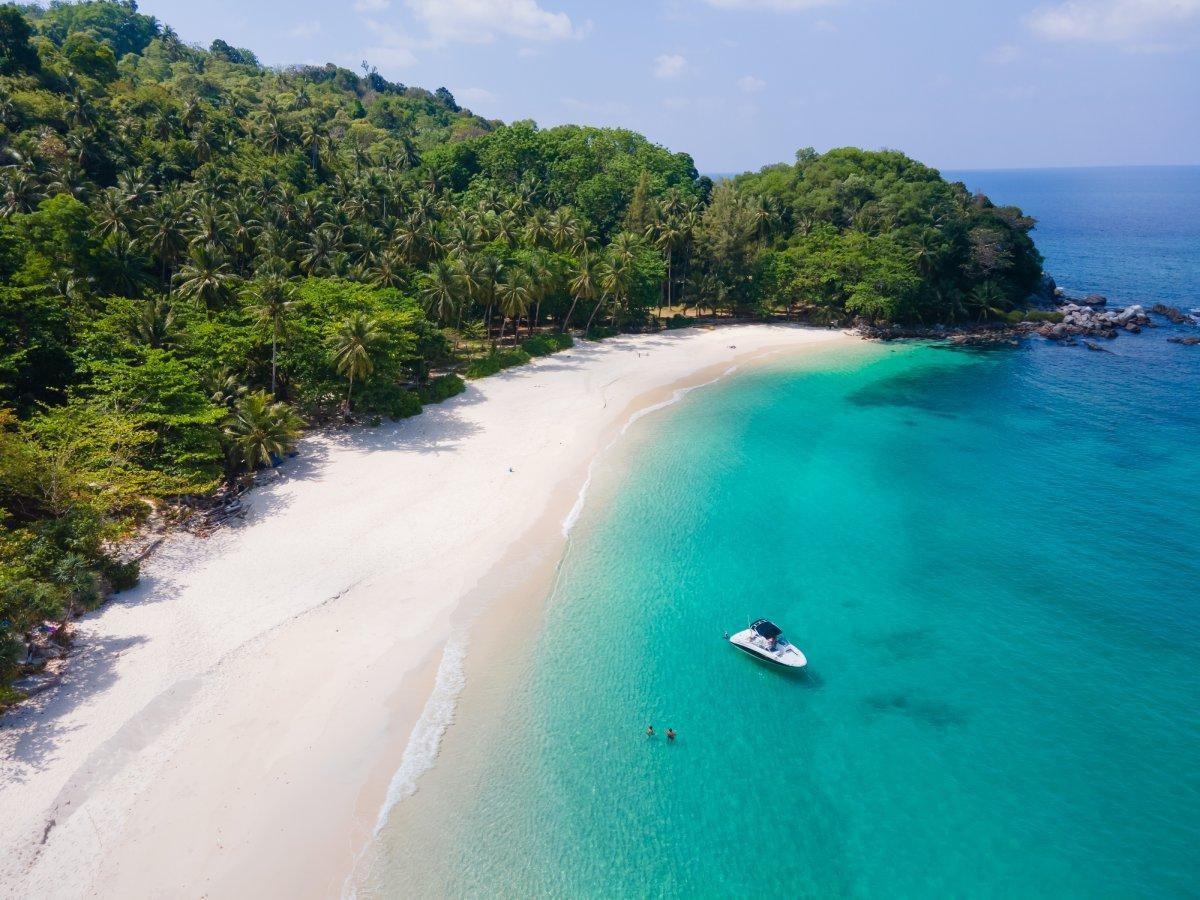

Hidden tropical beach in Asia with turquoise water, white sand and lush green cliffs
Hidden Beaches in Asia That Still Feel Like a Secret
Asia has no shortage of famous beaches. Phuket has its resort-lined shores, Bali has sunset crowds, and places such as Boracay seem to appear on every tropical bucket list ever written.
But some of the best beach days happen somewhere quieter.
The hidden beaches in Asia on this list aren’t necessarily places nobody has heard of. In the age of Instagram and travel blogs, keeping a beautiful beach completely secret is almost impossible. What they do offer is something increasingly valuable: space.
Sometimes getting there involves a small boat. Sometimes it means driving past the town where most tourists turn around. A few require enough effort that simply reaching the sand feels like part of the trip.
From a disappearing sandbar in eastern Indonesia to sleepy fishing-village beaches in Vietnam and Kerala, these are the Asian shores worth going a little farther for.
1. Ngurtafur Beach, Kei Islands, Indonesia
Ngurtafur doesn’t really look like a conventional beach from above. Instead, a ribbon of brilliant white sand stretches dramatically into turquoise water, leaving the sea on both sides.
Located around Warbal Island in Indonesia’s remote Kei Islands, the sand strip extends roughly two kilometres and is most striking when the tide is low. Indonesia’s tourism authorities also highlight the area for its clear water and unusually beautiful marine landscape. (Visit Indonesia)
The remoteness is a large part of the appeal. You’re not coming here for beach clubs, cafés or rows of loungers. You’re coming to walk across a strip of sand that seems to have appeared in the middle of the ocean.
Boat timing matters, particularly because the shape and visibility of the sandbar change with the tide. If you’re travelling this far east in Indonesia, don’t rush the experience.
2. Calaguas Islands, Philippines
Palawan gets most of the international attention, but the Philippines has more than 7,000 islands. There are still plenty of corners where tropical scenery comes without the polished resort experience.
The Calaguas Islands in Camarines Norte are a good example.
The journey itself filters out casual day-trippers. According to the Philippine Department of Tourism, reaching Calaguas involves roughly a two-hour boat ride from the jump-off point. Once there, visitors find white beaches, green hills and a setting suited to swimming, snorkeling and camping. (Department of Tourism)
Mahabang Buhangin on Tinaga Island is the stretch most travellers come for: pale sand, intensely blue water and hills rising behind the shore.
Don’t expect a luxury-island setup. That’s the point. Spend a night if you can. After the day boats disappear, Calaguas begins to feel much farther from mainland Luzon than it actually is.
3. Duli Beach, Palawan, Philippines
El Nido isn’t exactly an undiscovered destination anymore. Yet drive north from the busy town centre and Palawan becomes surprisingly quiet.
Duli Beach stretches for roughly two kilometres along the northern side of mainland El Nido. Palm trees and jungle sit behind a broad sweep of sand, while rocky sections at either end provide snorkeling opportunities. It is also known locally as a surfing beach. (DULI BEACH RESORT)
The surfing season is generally associated with the months around November through March, although conditions naturally vary. (Lonely Planet)
What makes Duli special isn’t some dramatic landmark. It’s the lack of one.
You can walk the beach without constantly stopping for vendors, tour groups or photo queues. Come early, bring what you need for the day, and let the empty sections of sand do the work.
4. Koh Kradan, Thailand
Thailand’s islands are hardly a secret, but travellers who automatically choose Phuket, Koh Samui or Phi Phi can overlook the quieter Trang archipelago.
Koh Kradan sits in the Andaman Sea and combines clear water, powdery sand and reefs close enough to shore to make snorkeling an easy part of the day. Thailand’s official tourism information continues to describe it as one of the country’s peaceful island escapes. (SAWASDEE THAILAND – THAILAND.GO.TH)
There are places to stay, so this isn’t a deserted-island survival adventure. Still, the atmosphere is noticeably slower than Thailand’s major resort islands.
The pleasure here is wonderfully uncomplicated: wake early, walk the beach before the boats arrive, swim, snorkel, read something, then repeat.
For travellers who want Thailand without feeling like they’re sharing every sunset with several thousand other people, Koh Kradan makes a convincing case.
5. Tanjung Rhu, Langkawi, Malaysia
Most first-time visitors to Langkawi gravitate toward Pantai Cenang. Drive toward the northern end of the island instead and the scenery changes.
Tanjung Rhu is framed by pale sand, calm water, greenery and limestone formations rising offshore. Langkawi tourism describes the area as secluded and notably quieter than the island’s busier beach districts. (Langkawi Island)
It’s not completely undeveloped—there are upscale resorts in the wider area—but parts of the public beach still feel remarkably peaceful.
Low tide can reveal more exposed sand, while late afternoon brings softer light across the limestone formations.
This is the kind of beach where doing less improves the visit. Skip the activity schedule. Bring something cold to drink, find a quiet stretch and stay through sunset.
Sometimes “hidden” simply means everybody else drove in the opposite direction.
6. Bai Xep, Quy Nhon, Vietnam
Vietnam’s coastline is huge, yet international beach tourism tends to cluster around a handful of names.
Bai Xep, south of Quy Nhon, offers something different.
The beach sits beside a small fishing village roughly 13 kilometres from central Quy Nhon. Golden sand, rocky edges and traditional boats give the bay a lived-in character that many more developed seaside destinations have gradually lost. (Vietnam Airlines)
And that’s important: Bai Xep doesn’t feel like a tropical stage set designed purely for visitors.
Fishermen still work here. Small lanes run through the village. Simple guesthouses and local places to eat are part of the experience.
Stay overnight rather than treating it as a quick photo stop. The nicest moments often come early in the morning, before the day’s heat arrives and while village life is already underway.
7. Tanjung Aan, Lombok, Indonesia
Bali may receive the headlines, but neighbouring Lombok is where many travellers go when they want a little breathing room.
Tanjung Aan lies near Kuta in southern Lombok and is formed by adjoining bays separated by a rocky headland. Its bright sand and water shifting between pale green and turquoise make it one of the most photogenic stretches on this side of the island. (Discover Lombok)
It isn’t completely hidden anymore. You will find small warungs and other visitors, particularly around the easiest access points.
Walk farther along the sand, though, and the mood quickly changes.
Come in the morning for calmer surroundings or stay toward sunset when the surrounding hills catch the last light. If you’re already exploring southern Lombok by scooter or car, it is an easy place to spend several unplanned hours.
8. Marari Beach, Kerala, India
Not every great Asian beach needs water the colour of a swimming pool.
Marari Beach, along Kerala’s Arabian Sea coast, has a softer appeal: golden sand, coconut palms and the rhythms of the nearby fishing community.
Kerala Tourism describes Marari as a peaceful alternative for travellers seeking long walks, village life and a slower coastal experience rather than water sports and busy beach shacks. (Kerala Tourism)
That simplicity is exactly why it works.
You might see fishermen heading out, bicycles passing through nearby lanes or almost nothing happening for an hour. After a few days of sightseeing around Kerala, that can feel surprisingly luxurious.
Marari also pairs naturally with the backwaters around Alappuzha, making it easy to combine one of India’s most famous landscapes with a beach that still feels low-key.
9. Kappad Beach, Kerala, India
A little farther north, Kappad proves that a beach doesn’t need luxury resorts—or even particularly flashy scenery—to deserve a place on a trip.
Located near Kozhikode, Kappad is known for its historic connection to Vasco da Gama’s arrival on India’s Malabar Coast. Yet beyond that historical footnote, it remains a relatively calm stretch of coastline where fishing boats and local visitors shape the atmosphere. Kerala Tourism describes it as tranquil and notes its rocky headland and quiet setting. (Incredible India)
Come here for a long walk rather than a packed day of activities.
Watch the fishing boats, explore the rocks and stay until the light begins to soften.
Kappad is a useful reminder that “hidden beach” doesn’t always mean remote island. Sometimes it’s a beautiful shoreline close to a city that international travellers simply overlook.
10. Tomori Beach, Amami ?shima, Japan
Japan probably isn’t the first country that comes to mind when someone says tropical beach, which is precisely what makes Amami ?shima interesting.
Tomori Beach sits close to the airport yet can look almost Okinawan-Caribbean in good weather: clear turquoise water, pale sand and green hills around the coast.
Amami ?shima has numerous uncrowded beaches, and Japan Guide notes that many have only basic facilities. Tomori itself has a small parking area and restrooms, keeping the setting refreshingly simple. (Japan Guide)
The water is inviting, but visitors should still pay attention to local warnings regarding currents and marine life.
Pair the beach with Amami’s forests, mangroves and small communities rather than rushing in and out. This isn’t Japan’s neon-and-bullet-train side. That’s exactly why it stays with you.
11. Tokashiku Beach, Okinawa, Japan
Take a ferry away from Okinawa’s main island and the colour of the sea begins doing ridiculous things.
Tokashiku Beach lies on Tokashiki Island in the Kerama Islands. It’s smaller than nearby Aharen Beach and surrounded by green hills, giving it a more intimate feel.
Japan’s national parks service highlights Tokashiku for calm water, swimming and the possibility of seeing sea turtles feeding in the shallows. (Japan Travel)
The important word there is possibility. Wildlife isn’t part of a scheduled performance, and it shouldn’t be treated like one. Keep your distance and let the animals decide whether an encounter happens.
Even without turtles, the combination of white sand and the famous blue waters of the Keramas is enough reason to make the journey.
12. Baisha Bay, Southern Taiwan
Taiwan is better known internationally for night markets, mountains and Taipei’s skyline than beach holidays. Its southern coastline, however, hides several small bays worth exploring.
Baisha Bay near Hengchun is one of them.
The beach is relatively compact—about 400 metres—and its sand is formed partly from finely broken shell and coral material. Taiwan’s Dapeng Bay National Scenic Area describes it as a small, quiet bay with delicate coastal scenery. (DBNSA)
Don’t arrive expecting a vast tropical island. Baisha works because of its scale.
Spend a few hours swimming or sitting beside the water, then continue exploring Taiwan’s southern coast. It’s ideal for travellers who prefer mixing beaches with food, road trips, temples and mountain scenery rather than spending an entire holiday inside a resort.
How to Visit Hidden Beaches Without Ruining Them
The irony of writing about hidden beaches is obvious. The more people discover them, the harder it becomes for them to stay quiet.
Travelling responsibly matters even more in remote places.
Bring reusable water bottles where safe refill options exist. Take rubbish back with you when there are no proper waste facilities. Avoid standing on coral, chasing turtles or taking shells home as souvenirs. Small communities also benefit more when visitors use locally owned guesthouses, boat operators and restaurants.
And don’t assume an empty-looking sea is automatically safe. Remote beaches may have no lifeguard, warning flags or rescue infrastructure. Ask locally about currents, tides and weather before swimming.
A little common sense preserves both the trip and the place.
When Is the Best Time to Explore Asia’s Hidden Beaches?
There isn’t one perfect month for every beach in Asia. The continent stretches across several climate zones, and rainy seasons vary significantly between countries—and sometimes between opposite sides of the same country.
As a broad rule, Thailand’s Andaman coast is often most appealing during its drier months, while central Vietnam has different weather patterns from southern Vietnam. Kerala’s comparatively dry December-to-March period is particularly popular for beach travel, while Japan’s southern islands come into their own during the warmer months. (Kerala Tourism)
Always check local weather and sea conditions shortly before travelling rather than relying entirely on a generic “best time to visit Asia” calendar.
The Best Beaches Are Sometimes the Ones That Take Effort
There is a reason famous beaches become famous. They’re beautiful, easy to reach and usually surrounded by comfortable places to stay.
But convenience changes a coastline.
Travel a little farther and the experience becomes different. You notice fishing boats instead of speedboats. There might be one café instead of thirty. At some beaches, the loudest sound really is still the sea.
That is the appeal of these hidden beaches in Asia.
You don’t have to discover somewhere nobody has ever visited. You just need to find a place where the landscape still feels more important than the tourism built around it.
And when you do, staying an extra day rarely feels like a mistake.
