

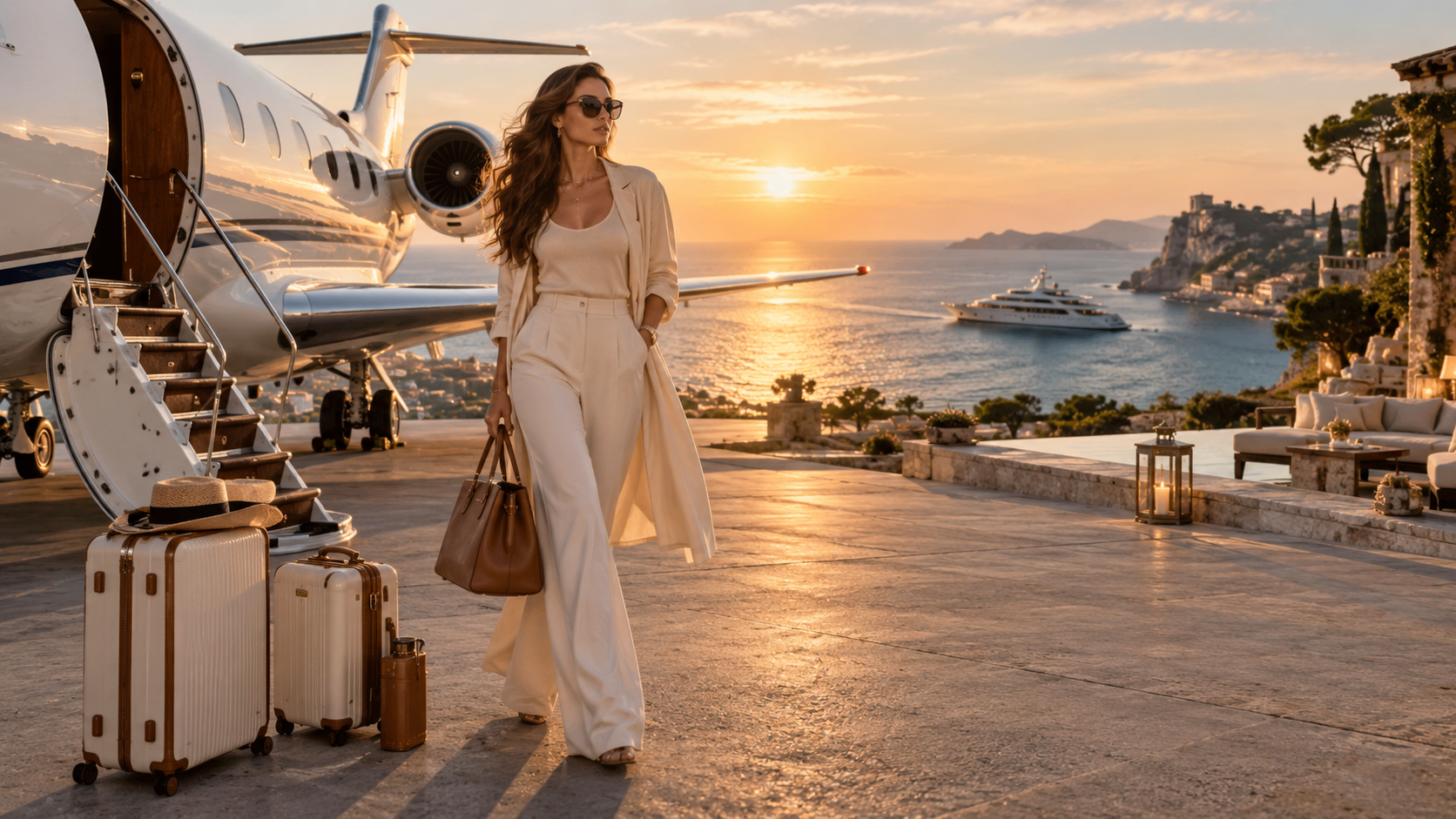

There is luxury travel, and then there is travel where the price stops being about the hotel room.
At the very top of the market, money buys something different.
Access.
Privacy.
Time.
A route that ordinary commercial schedules would make difficult. An entire island without strangers. A camp in Antarctica where almost everything has been flown in. A private aircraft moving between continents while somebody else handles every hotel, transfer and dinner reservation.
Sometimes the expense is obvious. A superyacht looks expensive because it is.
Other times, the real cost is hidden inside logistics. Getting a handful of people safely and comfortably to one of the least accessible places on Earth requires aircraft, specialist crews, equipment, permits and an enormous support operation.
That is why the most expensive travel experiences are rarely just upgraded versions of normal holidays.
They are experiences built around the idea that inconvenience can be engineered out of the journey.
Here are some of the ways travel becomes seriously expensive.
1. Around-the-World Trips by Private Jet
Commercial first class is expensive.
A fully curated private-jet journey across several continents operates on a different scale.
The appeal is not simply a larger seat.
Guests avoid rebuilding the trip every few days. The aircraft, luggage handling, hotels, ground transportation and excursions become parts of one continuous itinerary.
Four Seasons’ World of Adventures 2027 journey is a good example. The 24-day trip travels through nine destinations across four continents, including Kyoto, Bali, the Seychelles, Rwanda, Marrakech and the Galápagos Islands. The published price starts at US$239,000 per adult, based on double occupancy. The customized aircraft carries 48 travelers. (Four Seasons)
Its shorter Asia Unveiled 2027 journey covers Tokyo, Bali, Angkor Wat, Hoi An, Bhutan, the Maldives and Bangkok over 16 days, starting at US$167,000 per adult. (Four Seasons)
Those numbers sound extraordinary because they are.
But what guests are buying is partly continuity.
No repeated airport planning.
No rebuilding transfers in seven countries.
No wondering whether the local flight will work with the next hotel check-in.
The luxury is as much logistical as physical.
2. Flying Into the Interior of Antarctica
Antarctica is expensive before luxury enters the conversation.
It is remote, weather-dependent and operationally difficult.
Now add heated private accommodation, specialist guides, flights across the continent and access to places few travelers ever see.
The price climbs quickly.
White Desert’s current 2026–27 rates show just how far polar travel can go. Its South Pole & Penguins itinerary at Whichaway Camp or Echo Base is priced at US$115,500 per person. The journey combines a visit to the Geographic South Pole with an Emperor penguin colony. (White Desert)
Even the company’s shorter experiences operate at a level far beyond ordinary tourism. Its one-day Antarctica trip from Cape Town is listed at US$16,500, while multi-day expeditions involving emperor penguins, blue-ice formations and luxury camps can exceed US$100,000. (White Desert)
In this case, the expensive part is not a marble bathroom.
It is being comfortable somewhere comfort is extremely difficult to provide.
That feels like a more interesting form of luxury.
3. Chartering a Superyacht for a Week
A yacht holiday sounds simple until you look at what is actually being chartered.
At the top end, these are floating private hotels.
Multiple decks.
Crew.
Chefs.
Jacuzzis.
Beach clubs.
Tenders.
Jet skis.
Diving equipment.
Sometimes helicopters.
A week aboard a large superyacht can cost hundreds of thousands of dollars before fuel, food, port fees and gratuities are added.
For the biggest and newest vessels, weekly charter costs can move well beyond that.
But again, the appeal is not just the boat.
It is having complete control over where the hotel goes.
Breakfast off the coast of Sardinia.
Lunch somewhere quieter.
Dinner in a bay reachable only by water.
Wake up the next morning somewhere else without packing.
A high-end yacht effectively turns geography into room service.
That flexibility is what pushes the experience beyond a luxury resort.
4. Renting an Entire Private Island
Some travelers want an ocean-view villa.
Others apparently want the ocean too.
Private-island buyouts sit near the top of resort travel because the property is not merely private in the hotel sense.
The whole place can be yours.
For families, celebrities, executives or groups traveling together, this means accommodation, beaches, boats, staff and dining can all operate around one party.
There are no strangers beside the pool.
No competition for restaurant tables.
No need to lower your voice during breakfast because another couple is sitting nearby.
The economics vary enormously depending on location and property size, but exclusive island use can easily move into five- or six-figure nightly territory at the extreme end of the market.
It sounds excessive.
And it is.
But privacy is one of the few luxury products that becomes more expensive precisely because fewer people are present.
5. Safari Camps With Exclusive-Use Villas and Private Guides
A normal safari is already a specialist form of travel.
The most expensive version adds exclusivity at almost every step.
Instead of sharing a safari vehicle, you have your own guide and tracker.
Instead of a lodge room, you may occupy a private villa with several bedrooms, its own pool, chef, host and safari vehicle.
Transfers happen by small aircraft.
The camp sits inside a remote private concession where vehicle numbers are strictly limited.
This is particularly relevant in Botswana, Kenya, Tanzania and South Africa, where top lodges can create nearly private wildlife experiences.
The cost can rise dramatically when a family buys out an entire camp.
Yet this is one of those cases where paying more can genuinely change the safari itself.
Seeing a lion is one thing.
Sitting quietly with that lion for forty minutes because your private guide has nowhere else the group needs to be is something else.
Time becomes part of the product.
6. Private Villas With Full Household Staff
The word “villa” covers an enormous range of accommodation.
At one end, it means a holiday house with a pool.
At the other, it means a private estate operating like a five-star hotel built for one group.
Chef.
Butler.
Housekeeping.
Driver.
Security.
Concierge.
Spa treatments brought to the property.
Yacht or beach access.
Private cinema.
Several pools.
These properties appear in destinations such as the French Riviera, Lake Como, Ibiza, the Caribbean, the Maldives and parts of Southeast Asia.
For large families or groups, the interesting thing is that an extremely expensive villa can occasionally make more sense than reserving multiple top hotel suites.
You gain communal space and privacy while avoiding the strange experience of traveling together but living in separate hotel rooms.
At the highest level, though, this stops being about value.
It becomes about having an entire environment designed around your group.
7. Private Cultural Access
Some expensive experiences are difficult to photograph because the luxury is invisible.
Imagine seeing a museum after public hours.
Entering an archaeological site with a specialist before the crowds arrive.
Having a historian guide you through an archive that is normally closed.
Dining inside a historic estate after everybody else has gone home.
The location itself might not cost much to visit normally.
The access does.
This type of travel appeals to people who already have the hotels, flights and restaurants figured out.
What they want is something that ordinary money cannot simply purchase at the ticket desk.
Luxury travel companies therefore spend enormous effort arranging special access, private openings and expert-led visits.
Sometimes the rarest souvenir is being somewhere when almost nobody else is.
8. Bespoke Polar Expeditions
Antarctica is only one side of expensive polar travel.
The Arctic can be equally complex.
Private or near-private expeditions might involve Svalbard, Greenland, remote Canadian Arctic islands or the North Pole region.
Ice-strengthened vessels.
Helicopters.
Specialist naturalists.
Wildlife teams.
Remote camps.
The equipment required to operate safely in these environments creates a very different cost structure from an ordinary cruise.
And the weather remains in charge.
That is important.
You can spend enormous sums and still have the captain say, effectively, “Not today.”
Oddly, that unpredictability is part of the appeal.
There are still places where money can improve access without being able to control nature.
9. Private Train Carriages and Ultra-Luxury Rail Journeys
Luxury trains occupy a strange place in modern travel.
They are intentionally inefficient.
That is exactly why people love them.
A flight might cover the same distance in two hours.
A luxury train deliberately takes two days.
Guests eat multi-course dinners, sleep in private cabins and watch landscapes change outside the window.
At the highest end, travelers can reserve the best suites or, in some cases, book entire carriages or charter arrangements for private groups.
This turns transportation into the holiday itself.
There is no rush to arrive.
Arrival almost becomes inconvenient because it means the train journey is over.
In a world obsessed with saving time, paying enormous amounts to travel slowly feels strangely luxurious.
10. A Hotel Buyout for a Celebration
A destination wedding can be expensive.
Buying out an entire luxury hotel moves things into another category.
Rooms.
Restaurants.
Event spaces.
Pools.
Staff.
Entertainment.
Transportation.
Security.
Flowers.
Private dining.
Activities for guests.
Once dozens or hundreds of people are involved, the total cost can become enormous even before private aviation enters the picture.
The reason wealthy groups do this is control.
The property becomes a private world for several days.
Breakfast becomes part of the event.
The beach becomes part of the event.
Everyone is staying in one place.
The entire hotel can adapt its schedule around the group.
For milestone birthdays, weddings and family gatherings, that may matter more than individual room luxury.
11. Flying Privately Between Remote Destinations
A private jet from New York to London is expensive.
Using aircraft to connect destinations with poor commercial links can make private aviation even more valuable.
Imagine trying to combine:
A safari lodge.
Remote island.
Mountain resort.
Private yacht.
Several countries.
Commercial flights could consume days.
A private aircraft turns an awkward itinerary into something physically possible.
The most expensive trips often look remarkable because their locations seem impossibly far apart.
The aircraft is what makes that itinerary work.
This is another recurring pattern in ultra-luxury travel.
Money does not always buy a better version of the destination.
It buys a better connection between destinations.
12. Building a Completely Bespoke Expedition
Eventually, luxury travel stops appearing in brochures.
A traveler tells a specialist what they want.
Perhaps it is:
Patagonia by private aircraft.
A remote lodge.
Several days aboard an expedition yacht.
A private archaeological visit.
Then Antarctica.
The company designs the logistics from scratch.
Aircraft are chartered.
Guides are booked.
Properties may be bought out.
Permits are arranged.
Equipment is positioned.
Backup plans are built.
At this level, there may not be a published price because there is no standard trip.
The expensive part is customization itself.
You are no longer purchasing a holiday.
You are commissioning one.
Why Do These Trips Cost So Much?
The easy answer is luxury.
The more accurate answer is scarcity.
A hotel room in a major city can serve hundreds of guests over time.
A remote Antarctic camp has limited capacity and a very short operational season.
A private jet has limited seats.
A yacht requires a full crew whether two guests are aboard or twelve.
A private island cannot sell the same beach to another guest when you have bought it out.
Luxury travel becomes extremely expensive when three things overlap:
Few people can participate.
The logistics are difficult.
The experience requires significant staff or infrastructure.
That is why remote experiences often cost more than superficially glamorous ones.
Getting to the South Pole is simply harder than putting another suite on the 30th floor of a city hotel.
Are the Most Expensive Experiences Actually the Best?
Not automatically.
This is where travel gets interesting.
A US$100,000 expedition can still be ruined by weather.
A private yacht can spend several days in rough seas.
An extremely expensive resort can feel sterile.
A celebrated restaurant can disappoint you.
Price reduces certain kinds of inconvenience.
It does not manufacture emotion.
Some of the best travel moments remain stubbornly inexpensive.
A roadside meal.
An unexpected conversation.
Walking somewhere at sunrise.
A beach you reached before everybody else.
Money can create access to extraordinary experiences.
It cannot guarantee that those will become your favorite memories.
What Ordinary Travelers Can Learn From Ultra-Luxury Travel
There is one useful idea behind almost every expensive experience in this article:
Spend money where it changes the experience most.
You do not need a private jet.
But a direct flight may be worth more than an upgraded hotel room.
You do not need to buy out an island.
But choosing a small hotel away from crowds may improve the trip.
You do not need a private safari camp.
Perhaps paying for one private game drive is enough.
You do not need a six-figure Antarctic expedition.
But you can think carefully about whether the cheapest itinerary actually gives you the experience you traveled there for.
Luxury travelers tend to pay heavily for time, privacy, access and convenience.
Those priorities still work at ordinary budgets.
The Most Expensive Travel Is Really About Access
That is the common thread.
Private aircraft give access to difficult combinations of destinations.
Antarctic expeditions provide access to environments that are genuinely hard to reach.
Superyachts access coastlines from the water.
Private islands create access through exclusion.
Expert guides provide intellectual access.
Hotel buyouts provide control.
The visible luxury—beautiful rooms, champagne, polished service—is almost secondary.
The real product is freedom from the usual limitations of travel.
The most expensive travel experiences allow people to go farther, wait less, share the experience with fewer strangers and design the journey around themselves.
Whether that is worth US$10,000, US$100,000 or substantially more is another question.
But at the very top of the market, that seems to be what people are really buying.
Not simply a better holiday.
A version of travel with fewer boundaries.
