

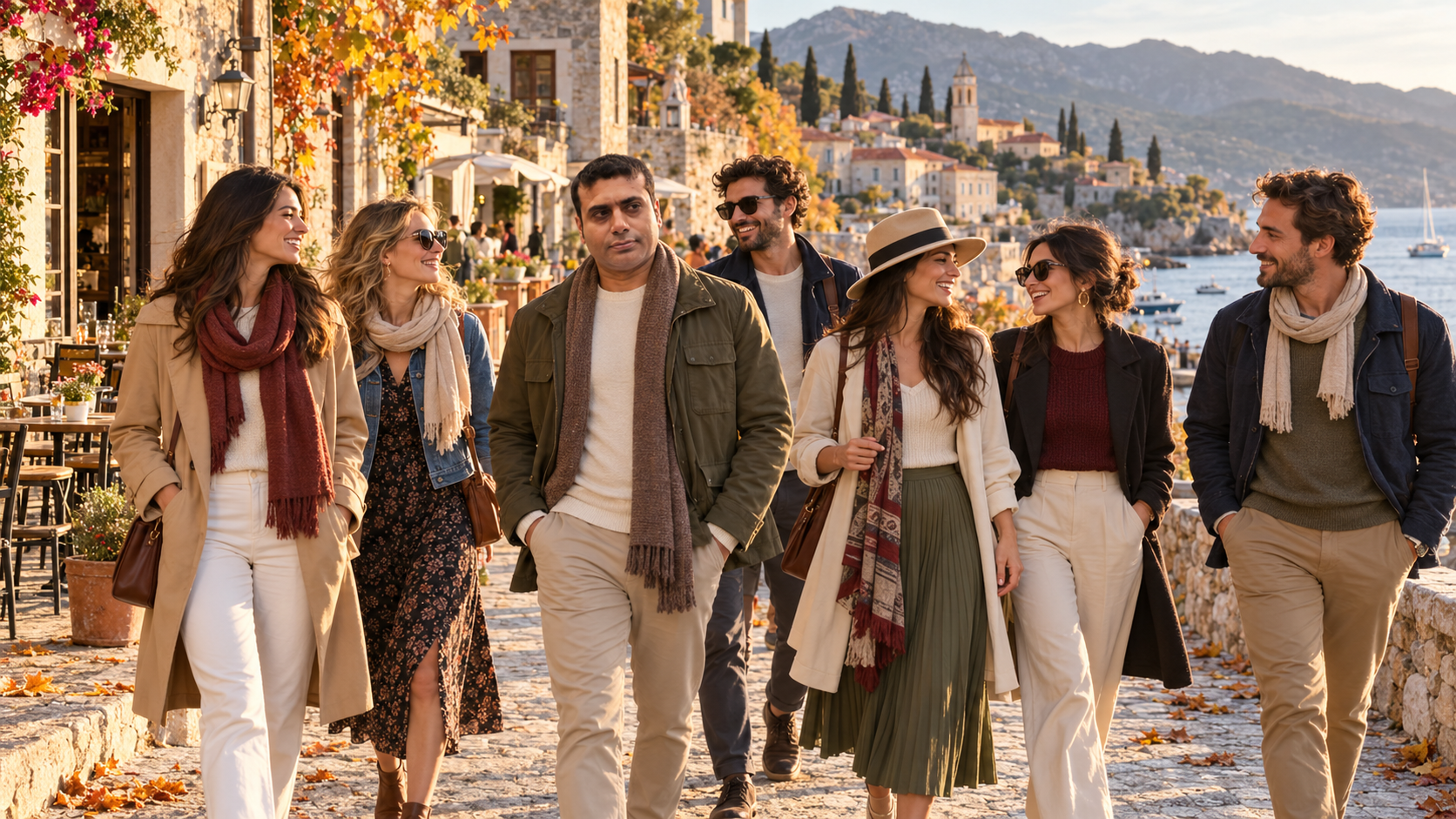

For years, shoulder-season travel was treated like the compromise version of a vacation.
You went in May because June was too expensive.
You booked Greece in September because August hotels had become ridiculous.
You visited a national park after Labor Day because everybody else had gone home.
The assumption was simple: peak season offered the “real” experience, while shoulder season was what sensible travelers accepted in exchange for lower prices.
That equation is changing.
In many destinations, shoulder season travel is no longer the compromise. It is becoming the better trip.
Summer heat has become harder to ignore. Famous cities and beaches are struggling with increasingly concentrated crowds. Hotel prices during traditional high season can stretch beyond what the experience actually justifies.
Meanwhile, spring and fall are becoming more active rather than sleepy.
Restaurants stay open longer.
Airlines extend schedules.
Hotels stretch their operating seasons.
Travelers are adjusting too.
Condé Nast Traveler reported in September 2026 that major autumn trips—what some travel advisors now call “fallcations”—are rising sharply. Virtuoso bookings for fall were reportedly up 59% year over year, including a 77% rise in September sales. Heat, overcrowding, high summer prices and the desire for a more comfortable experience were among the reasons travelers were shifting trips later.
The interesting part is no longer whether shoulder season works.
It is whether peak season still deserves to be the default.
What Does Shoulder Season Travel Actually Mean?
Shoulder season is the period between a destination’s high season and low season.
For much of Europe, that traditionally means:
April to May before the summer rush,
and
September to October after it.
But there is no universal shoulder-season calendar.
A Caribbean island, Alpine ski town, Japanese city and safari destination all operate on completely different tourism cycles.
Even within the same country, seasonality can change.
A beach resort may effectively shut down while the nearby capital remains busy year-round.
That is why the useful definition is not:
“Travel in spring or fall.”
It is:
Travel immediately before or after a destination’s busiest period, while the experience you actually want is still available.
That last part matters.
Cheap is not automatically good.
1. Peak Season Is Increasingly Too Hot
This may be the biggest change.
A decade ago, a July European vacation was often sold with uncomplicated language:
sunshine,
long evenings,
outdoor dining,
beach weather.
Those things are still appealing.
The heat is increasingly not.
Southern European cities can become exhausting during intense summer temperatures. Archaeological sites have little shade. Long lunches outside become less attractive. Walking ten miles through Rome, Athens or Seville stops feeling romantic somewhere around the point when the pavement appears to be radiating directly through your shoes.
Condé Nast Traveler’s 2026 reporting on the shift toward autumn travel specifically identifies extreme summer heat as one of the reasons travelers are moving major vacations into September, October and November.
That changes the value proposition.
A trip is not better because the weather is technically “warmer.”
It is better when the weather allows you to do what you came for.
For sightseeing, hiking and road trips, 72°F can be far more useful than 95°F.
2. Fewer People Can Improve Almost Every Part of the Trip
Crowds don’t simply affect photographs.
They alter how destinations function.
A beautiful old town packed shoulder-to-shoulder becomes a movement problem.
A museum becomes a queue.
A famous beach becomes a parking exercise.
A restaurant dinner starts with refreshing reservation apps three weeks before arrival.
The most obvious advantage of shoulder season travel is that many destinations become easier to use.
You may be able to enter attractions without building the entire day around a timed ticket.
Popular neighborhoods become places to walk rather than routes through crowds.
Even small improvements matter.
A shorter airport line.
An empty seat on the ferry.
A hotel pool with actual loungers available.
A viewpoint where you can stand quietly for ten minutes.
None sounds revolutionary.
Together, they can completely change a vacation.
3. Your Money Often Buys a Better Trip
Shoulder season is frequently described as cheaper travel.
That undersells the advantage.
The important thing is not simply paying less.
It is what the same budget can buy.
A traveler who would spend $350 a night for a basic peak-season room may find a much better hotel within the same budget outside the busiest weeks.
Instead of cutting the hotel bill, you can upgrade.
Instead of taking the cheapest flight schedule, you may have room for a better departure time.
Instead of deciding that a private tour is too expensive, the savings elsewhere can fund one.
The European Travel Commission’s 2026 work on responsible travel behavior found continued interest in traveling outside peak periods, with travelers drawn by both smaller crowds and better value. Its research also suggests travel demand is beginning to redistribute, albeit gradually, beyond the traditional summer concentration.
There is an important caveat, though.
The best-known shoulder periods are getting more expensive as travelers discover them.
September in Italy is no longer a secret.
Neither is October in Greece.
Which leads to the next point.
4. Shoulder Season Is Moving
The old formula was simple:
July and August = busy.
September = quiet.
That no longer works everywhere.
Condé Nast Traveler’s 2026 reporting warns that the surge in autumn demand could effectively turn September and October into new peak periods in some destinations.
That creates what I would call the shoulder-season paradox.
Travelers move away from peak season because shoulder season is better.
Enough travelers do it.
Shoulder season becomes crowded.
The answer is not to abandon the strategy.
It is to become more precise.
Instead of:
Italy in September
think:
Puglia in late October.
Instead of:
Greece in September
consider:
Crete in early October or Athens and the Peloponnese in spring.
Instead of choosing the most famous destination during its most famous shoulder month, move either the date or the geography one step further.
The smarter traveler is no longer asking:
“What is shoulder season?”
They are asking:
“Where is the useful edge of the season now?”
5. Restaurants and Hotels Are Extending Their Seasons
Historically, one drawback of traveling outside summer was that the destination could start closing around you.
Beach clubs disappeared.
Ferries reduced frequency.
Seasonal restaurants locked their doors.
Hotels shut down until spring.
That still happens.
But strong autumn demand is encouraging some airlines, cruise lines, hotels and hospitality businesses to operate later into the year, according to Condé Nast Traveler’s reporting on the fall-travel boom.
This is important because shoulder season only works when enough of the destination remains functional.
The sweet spot is:
fewer visitors + most businesses still operating.
Go too late and the atmosphere disappears.
Go at exactly the right time and you may get nearly everything peak season offers with substantially less friction.
6. The Destination Often Feels More Local
Peak-season travel can unintentionally turn destinations into tourism machines.
Restaurants expand hours.
Seasonal workers arrive.
Tours multiply.
Entire neighborhoods begin operating around visitors.
This is not inherently bad. Tourism is economically important to many places.
But it does change the feeling.
Travel after the busiest period and daily life becomes more visible again.
Schools are open.
Residents are back from their own summer holidays.
Markets feel less like attractions.
Restaurants may be serving a larger local audience.
You notice the place rather than only its tourism infrastructure.
This is one reason autumn works particularly well in destinations centered around food and agriculture.
Harvests begin.
Wine regions become active.
Seasonal menus change.
The trip acquires a reason for being there beyond “the weather was good.”
7. Shoulder Season Creates Better City Trips
Cities may be where the argument becomes strongest.
Ask what you actually do during a city break.
Walk.
Visit museums.
Eat.
Shop.
Sit outside.
Walk again.
Very little of that requires midsummer.
In fact, much of it becomes better when the temperature drops.
Paris in October.
Rome in late April.
Madrid in early November.
Lisbon in May.
Tokyo in autumn.
These places don’t suddenly become less interesting because you need a light jacket.
If anything, city travel often becomes easier once people stop treating the hottest months as automatically superior.
8. Hiking Becomes More Enjoyable
The same logic applies outdoors.
Summer is sometimes the safest or only season for high-altitude routes.
But many lower-elevation hiking destinations are better at the edges of the season.
Cooler temperatures reduce heat stress.
Trails are quieter.
Wildflowers can transform spring hiking.
Autumn foliage can make familiar landscapes look completely different.
The European Travel Commission notes that media and traveler interest increasingly include spring, autumn and even winter alternatives to traditionally summer-focused destinations, particularly as concerns about heat and wildfire risk grow.
Just remember that shoulder-season nature travel requires more preparation.
Weather becomes less predictable.
Daylight shortens.
Mountain services may close.
The trade-off is often worth it, but it needs planning.
9. Photography Is Usually Better Too
Midday summer light is brutal.
Bright sky.
Hard shadows.
Crowded viewpoints.
People everywhere.
Shoulder season frequently produces softer conditions.
Autumn can bring atmospheric light and color.
Spring gives landscapes fresh vegetation.
Shorter days mean sunrise and sunset happen at more civilized hours.
Even clouds—which beach advertising treats like failure—can create far more interesting travel photographs.
And fewer people makes composition easier.
You do not need to wake at 4:45 a.m. simply to photograph a famous square without 900 other people in it.
Sometimes 7:30 works.
Luxury.
10. It Can Make Popular Destinations Feel New Again
One of the most underrated uses of shoulder season is revisiting somewhere you already know.
Venice in August and Venice in November are almost different destinations.
A Mediterranean island in July feels completely different after beach season begins winding down.
A U.S. national park after school resumes has a different rhythm from the same park during summer vacation.
Condé Nast Traveler’s current autumn coverage describes travelers increasingly seeking exactly this kind of slower, more immersive experience rather than simply moving the same summer itinerary into a different month.
That means you do not always need somewhere new.
Sometimes you need a familiar destination at the right time.
When Shoulder Season Is NOT Better
This is where a lot of travel advice becomes too enthusiastic.
Shoulder season has drawbacks.
Sometimes serious ones.
Beach Trips
If your entire goal is:
swimming,
sunbathing,
boat trips,
and beach clubs,
then the end of the season can become a gamble.
The hotel may be cheaper because the sea is cold and the wind is unpleasant.
That is not a bargain.
Small Islands
Seasonal islands can change quickly.
Ferries become less frequent.
Restaurants close.
Tours stop.
Weather disrupts transfers more easily.
A quiet island can be magical.
A closed island is just inconvenient.
High Mountains
Late spring can still mean snow.
Autumn can bring early storms.
Cable cars and mountain huts may operate seasonally.
Never assume “fewer crowds” means “better conditions.”
Wildlife Trips
Wildlife does not care about hotel pricing.
Migration, breeding, rainfall and food availability determine when certain experiences happen.
If seeing a specific animal event is the entire point, nature gets the deciding vote.
Spring or Fall: Which Shoulder Season Is Better?
They produce different trips.
Choose spring when you want:
fresh landscapes,
flowers,
longer days,
snowmelt waterfalls,
and the feeling of destinations waking up.
Spring is particularly appealing for cities, gardens, road trips and lower-altitude hiking.
Choose fall when you want:
warmer seas,
harvests,
wine regions,
autumn color,
and a more established tourism infrastructure after summer.
For Mediterranean trips, I generally prefer early fall.
The sea has had an entire summer to warm.
For city sightseeing, spring may have the edge.
The New Rule: Don’t Book a Month. Book a Window.
This is perhaps the most important shoulder-season strategy.
Don’t say:
“I want to go to Greece in October.”
Ask:
“Which part of Greece still works best during the first half of October?”
Don’t say:
“Japan in fall.”
Ask:
“Where will foliage be developing during the exact week I’m traveling?”
Don’t say:
“I’ll visit the Alps in May because it will be cheaper.”
Ask whether:
roads,
lifts,
trails,
restaurants,
and hotels
are actually operating.
The more seasonal the destination, the more exact the planning needs to become.
A Simple Shoulder-Season Test
Before booking, check five things:
Weather: Is it merely cooler, or genuinely unreliable?
Transport: Are ferries, trains and seasonal flights still frequent?
Hotels: Are the properties you actually want open?
Activities: Can you still do the main reason for visiting?
Local rhythm: Is the destination pleasantly quiet or largely closed?
If all five answers work, shoulder season is probably the better trip.
Peak Season Is Not Going Away
There are good reasons people travel during peak periods.
School holidays.
Guaranteed weather.
Maximum transport schedules.
Festivals.
Long daylight.
Families often do not have much flexibility.
And some destinations genuinely operate best at their busiest time.
So this is not an argument that everyone should stop traveling in summer.
It is an argument against assuming summer is automatically the premium version of travel.
Increasingly, it isn’t.
Why Shoulder Season Travel Is Winning
The traditional travel calendar was built around convenience:
summer holidays,
school schedules,
warm weather.
The newer travel calendar is becoming more experience-driven.
People are beginning to ask:
When will I enjoy walking through this city?
When will the trails be comfortable?
When can I get the hotel I actually want?
When will I spend less time queuing?
When will the destination feel most like itself?
Those questions naturally push many trips away from their historic peaks.
That is why shoulder season travel is becoming more than a money-saving trick.
In the right destination, at the right time, you get:
better temperatures,
lighter crowds,
better value,
easier reservations,
more breathing room,
and often a stronger connection to the place itself.
There is only one problem.
Everybody else is starting to notice.
The next evolution of smart travel will therefore not simply be choosing shoulder season.
It will be finding the shoulder within the shoulder—the week just before everybody arrives, or just after they leave, when the destination is still alive but no longer performing at full volume.
That is the sweet spot.
And increasingly, it is where the best trips are hiding.
